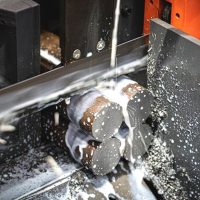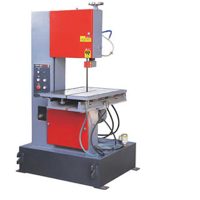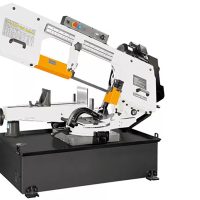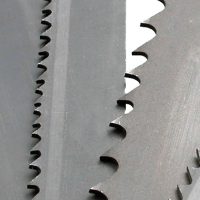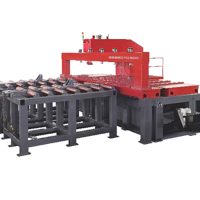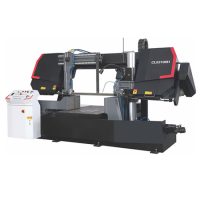
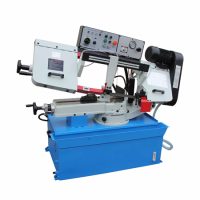
CL53100H CNC Horizontal Band Saw Machine
Cutting Capacity :
Achieving a perfect 45-degree cut—whether for a picture frame, crown moulding, or a structural joint—is a hallmark of quality craftsmanship. The accuracy of this cut directly impacts the fit, finish, and strength of your project. However, with numerous saw types available, selecting the optimal tool can be daunting. This definitive guide explores the best saws for cutting 45-degree angles, delving into mechanics, comparative performance, and key selection criteria to ensure precision in every mitre.
A 45-degree angle, or mitre, is fundamental in woodworking, metalworking, and construction. It is the primary joint for creating corners in frames, mouldings, and trim work. Inaccuracies here lead to visible gaps, weakened structures, and wasted material. The choice of saw is not merely about making the cut, but about guaranteeing its repeatable precision and clean finish.
Different saws bring unique advantages to the mitre-cutting task. The best choice depends on your material, volume of cuts, required portability, and precision tolerance.
The mitre saw is purpose-built for angled crosscuts. Its rotating base and pivoting arm allow for precise angle selection.
Best For: Wood, PVC, aluminium extrusions, and some composite materials.
Key Advantage: Unmatched speed and repeatability for multiple identical mitres. Compound and sliding compound mitre saws can handle wider boards and bevels simultaneously.
Precision Factor: High. Laser guides, positive stops at common angles, and clamps enhance accuracy. Top-tier models offer accuracy within ±0.5 degrees.
Limitation: Primarily for crosscutting; not for rip cuts. Limited depth of cut compared to circular saws.
With a mitre gauge or a high-quality sled, a table saw can produce exceptionally accurate 45-degree cuts.
Best For: Ripping angled edges on panels, cutting mitres on large or long stock that is unwieldy for a mitre saw.
Key Advantage: Superior for long, rip-type mitre cuts (e.g., for a box side). A well-tuned crosscut sled is arguably the most accurate tool for panel mitres.
Precision Factor: Very High, but dependent on jig quality and user skill. A precision sled can achieve near-perfect mitres.
Limitation: Setup is more involved. Less safe and efficient for cutting multiple short pieces to length compared to a mitre saw.
When paired with an angled guide or a digital attachment, a circular saw can cut 45-degree angles on large sheet goods or on-site.
Best For: Breaking down plywood or large boards on-site where mitres are needed.
Key Advantage: Portability and ability to cut large materials that won’t fit on a table or mitre saw.
Precision Factor: Moderate to High. Entirely dependent on the quality of the guide system (e.g., Kreg Accu-Cut, Track Saw systems). Freehand cutting is highly inaccurate for mitres.
Limitation: Less convenient and slower for high-volume, small mitre cuts.
A backsaw in a well-made mitre box provides surprising accuracy without power.
Best For: Fine woodworking, small trim repairs, or when quiet, dust-free operation is needed.
Key Advantage: Inexpensive, quiet, portable, and offers great control for delicate work.
Precision Factor: Moderate. Limited by the quality of the box and user technique. Best for smaller stock.
Limitation: Physically demanding. Slow and impractical for large volumes or dense materials.
While not the primary choice for straight mitres, a bandsaw excels at cutting complex compound angles or mitres on thick, irregular stock.
Best For: Thick hardwoods, curved mitre joints, or resawing at an angle.
Key Advantage: Minimal kerf waste and ability to handle very large stock thicknesses.
Precision Factor: Moderate for straight mitres. Requires a well-tuned fence and careful setup.
Limitation: Typically less precise for fine joinery than a mitre or table saw. Leaves a rougher cut that often requires cleanup.
| Saw Type | Best Material Application | Typical Angle Accuracy | Speed/Volume Suitability | Portability | Key Requirement for Accuracy |
|---|---|---|---|---|---|
| Mitre Saw | Trim, Moulding, Framing Lumber | ±0.5° (on premium models) | High Volume | Low to Medium | A sharp blade, solid fence, and calibrated stops. |
| Table Saw | Sheet Goods, Long Ripped Mitres | ±0.25° (with premium sled) | Medium Volume | Stationary | A precision crosscut sled or high-end mitre gauge. |
| Circular Saw | Large Panels, On-Site Cuts | ±0.5° – 1° (with track system) | Low to Medium | High | A reliable track or angle guide system. |
| Handsaw & Box | Small Trim, Fine Detail | ±1° (with careful use) | Low Volume | High | A high-quality mitre box and a sharp, fine-tooth backsaw. |
| Band Saw | Thick Stock, Compound Angles | ±1° – 2° (for mitres) | Low to Medium | Stationary | A sharp, wide blade and a properly aligned fence. |
No saw can cut a perfect 45-degree angle with a dull or inappropriate blade.
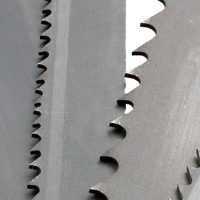
Tooth Count: A higher tooth count (80-100 for a 10″ blade) yields a smoother cut in wood and aluminium. For rough cuts, 24-40 teeth are sufficient.
Blade Type: Use a crosscut or combination blade for mitres in wood. A triple-chip grind (TCG) or alternate top bevel (ATB) blade is ideal for clean, splinter-free cuts in moulding and trim.
Kerf: Thin-kerf blades remove less material, reduce strain on the motor, and are excellent for mitre saws on trim work.
The “best” saw is the one that aligns perfectly with your specific needs. Use this decision pathway:
For Trim Carpentry, Framing, and High-Volume Repetitive Mitres:
A Compound Sliding Mitre Saw is the undisputed champion. Its speed, dedicated function, and repeatability make it the most efficient and accurate choice for 90% of on-site and shop mitre work.
For Furniture Making, Cabinetry, and Precision Panel Mitres:
A Table Saw with a Dedicated Crosscut Sled provides the ultimate in control and accuracy for joinery, especially when working with sheet goods or long boards.
For On-Site Work with Large Sheets or When Portability is Paramount:
A Circular Saw Paired with a Track Guide System (a “track saw”) offers near-stationary-tool accuracy in a portable package, making it ideal for cutting mitres in countertops or plywood.
For Occasional Small Projects or Fine Finishing Work:
A Quality Mitre Box and Sharp Backsaw is a simple, effective, and quiet solution that teaches fundamental technique and control.
Calibrate Relentlessly: Use a high-quality digital angle finder to check and calibrate your saw’s angle stops and fence squareness regularly.
Test on Scrap: Always make a test cut on identical scrap material to verify fit before cutting your finished piece.
Support Your Work: Use extended fences and roller stands to prevent material from sagging or moving during the cut.
Mind the “Spring”: Mouldings often need to be cut with the finished face out on a mitre saw to account for “spring” or curvature. Always lay out the cut sequence.
Sharpness is Non-Negotiable: A sharp blade reduces tear-out, burning, and deflection—all enemies of a tight mitre joint.
Ultimately, the best saw for cutting 45-degree angles is the one you have properly tuned, equipped with a sharp, correct blade, and have the skill to use effectively. For most professionals and serious DIYers, a well-calibrated compound mitre saw serves as the cornerstone for perfect angles, while a table saw with a sled provides the pinnacle of precision for the shop. Invest in the right tool for your primary workflow, master its setup, and your 45-degree joints will be seamless every time.
Cutting Capacity :
Cutting Capacity :